
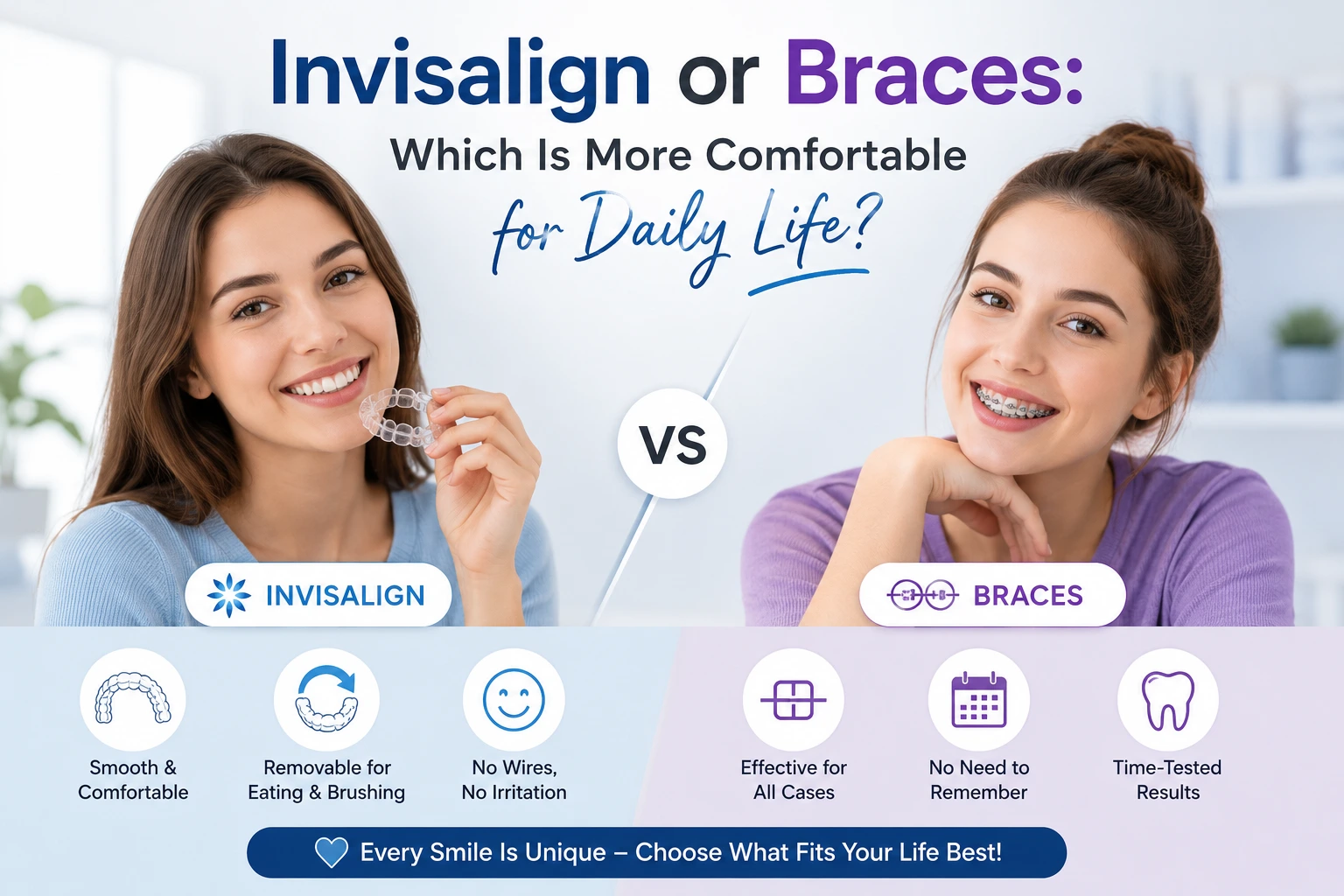
Getting your teeth straightened requires a major time commitment. You want results without constant pain. Most patients sitting in our chairs ask the exact same question before starting treatment. Which option causes less daily irritation?
We see the physical realities of orthodontic treatment every day.
Evaluating braces or Invisalign for adults
When you look at braces or Invisalign for adults, physical comfort usually drives the final decision. Metal brackets are the clinical standard. They handle complex bite issues effectively. The physical sensation of metal attached to your enamel takes some adjustment. You will feel the metal rubbing the inside of your cheeks.
Clear aligners use smooth plastic. The custom-molded trays fit tightly over your teeth. You avoid sharp edges. Cuts and mouth sores rarely happen. Your tongue notices the plastic edges for the first couple of days. That awareness goes away fast.
Analyzing pain levels: Invisalign or normal braces
Tooth movement causes soreness. The mechanism of applying pressure is the main difference when comparing Invisalign to normal braces.
Brackets use a wire that an orthodontist tightens. This creates a sudden, sharp spike in pressure. Your teeth feel tender for two to three days after you leave the clinic. Biting into a normal sandwich requires effort during this window.
Clear trays shift teeth differently. You swap trays at home every one to two weeks. The pressure stays consistent. Patients report a tight squeezing sensation when snapping in a new set. This tightness drops off significantly within 24 hours.
Working professionals often ask about daily disruptions. Brackets are visible. Clear trays are virtually invisible. People sitting across a conference table will not notice them.
The trays demand bathroom breaks. If you sip coffee during the workday, you must take the aligners out. Hot liquids warp the thin plastic. Drinking anything besides water leaves sugars trapped against your enamel. You will spend time taking the trays out, drinking, and rinsing your mouth. This frustrates heavy coffee drinkers. Brackets do not restrict your liquid intake.
Daily maintenance: Invisalign or regular braces
Looking at Invisalign or regular braces, the eating experience dictates much of your routine.
Brackets stay on 24/7. You change what you eat. Biting an apple or chewing tough bread can snap a wire. Broken hardware requires an immediate clinic visit. It causes physical discomfort until fixed.
You remove clear trays before meals. You eat whatever you want. You must brush before inserting the trays back in. Leaving food trapped under the plastic accelerates decay.
Maintaining hygiene involves specific tools depending on your choice.
For traditional brackets, your daily kit must include:
- Floss threaders to maneuver under the archwire
- Interdental brushes to clear food around the brackets
- Orthodontic wax for sharp edges
- A water flosser to remove stubborn debris
For clear trays, your kit is much simpler:
- A soft-bristled toothbrush exclusively for the trays
- Clear, uncolored antibacterial soap
- A protective carrying case
We look at daily friction points to build a reliable braces vs aligners comfort comparison. This helps you understand the actual physical impact.
| Daily Activity | Traditional Brackets | Clear Aligners |
| Eating Meals | Food gets stuck easily. Hard or sticky foods are restricted. | Remove trays to eat. No diet restrictions. |
| Brushing & Flossing | Requires interdental brushes. Takes extra time. | Remove trays. Brush and floss normally. |
| Mouth Irritation | Wires and brackets poke cheeks and lips. | Smooth plastic edges. Minimal soft tissue irritation. |
| Sports & Activities | High risk of soft tissue injury upon impact. | Can be removed for contact sports or when wearing mouthguards. |
We rely on this braces vs aligners comfort comparison to set accurate patient expectations. Knowing the practical hurdles prevents frustration two months into your treatment.
Social situations also affect comfort levels when choosing braces or Invisalign for adults. Some adult patients feel self-conscious giving a presentation or attending a networking event with metal brackets. The mental comfort of clear trays is significant for adults in client-facing roles. You can smile and speak without worrying about visible hardware.
Speech adjustments happen with both methods. Brackets cause a slight lisp at first. Your lips stretch over the hardware. Clear trays add physical bulk behind your front teeth. Your tongue hits the plastic when making “s” sounds. Your mouth adapts in a week.
Sleeping brings comfort variables. The first nights with brackets often disrupt sleep. The inside of your mouth is not accustomed to the metal friction. Orthodontic wax covers sharp edges. Calluses eventually form inside your cheeks.
Aligners eliminate friction. They function like a thin nightguard. Some patients clench their teeth slightly against the plastic at night. The snug fit means no sharp components wake you up.
Orthodontic visits for brackets require removing bands, changing wires, and reapplying tension. These happen every four to six weeks. The appointments take time. Aligners require fewer visits. We see you every eight to twelve weeks to check progress and provide the next tray sets. These visits are short. No physical adjustments happen in the chair.
Travel changes depending on your treatment. Managing brackets on a long trip requires packing wax and a proxy brush. If a bracket breaks on vacation, you manage the discomfort until you find an emergency orthodontist. With aligners, you pack your current tray and a backup. There are no emergency breakages to worry about.
If you lose a tray, you often move to the next set early. You call our clinic, and we update your chart. If you lose a metal bracket, the wire hangs loose and pokes your cheek until you come in for a repair.
Removable trays require strict compliance. You must wear them 22 hours a day. If you leave your trays out for a full day, the next time you put them in, it hurts. The plastic forces the shifted teeth back into the correct position aggressively.
Also Read :- Full Mouth Dental Implants in Gurgaon for Japanese and Korean Expats
Conclusion
Straightening your teeth should not control your routine. Both methods achieve the final result. The choice comes down to the daily maintenance you are willing to handle. Metal hardware forces diet changes and requires careful cleaning. Removable trays demand the discipline to wear them almost constantly. We evaluate your bite and your daily habits to recommend the most practical option. You can book a consultation with our team to start the process. Visit The Dental Villa to schedule your appointment today.
Frequently Asked Questions
Is the treatment time faster with Invisalign or normal braces?
- Treatment duration depends on your case complexity. Mild crowding resolves faster with clear trays. Severe bite issues require the heavy force of brackets. We determine the timeline after scanning your teeth.
What is more cost-effective: Invisalign or regular braces?
- The cost difference is minimal now. Many cases price out similarly. Complex bracket treatments sometimes cost more because of the extended time in the chair and frequent wire changes.
How do I clean my trays vs my brackets?
- Brackets need interdental brushes to clear food from the wires. You simply rinse trays with water and scrub them with a soft toothbrush and clear antibacterial soap.
What should I choose if I play contact sports: braces or Invisalign for adults?
- Clear trays are safer for sports. You take them out and put in a standard athletic mouthguard. Metal brackets pose a severe laceration risk if you take a direct hit to the mouth.
Can I see a full braces vs aligners comfort comparison for my specific case?
- Yes. Your bone structure and tooth alignment change how each option feels. We provide a customized breakdown during your first visit so you know what the physical process looks like.