
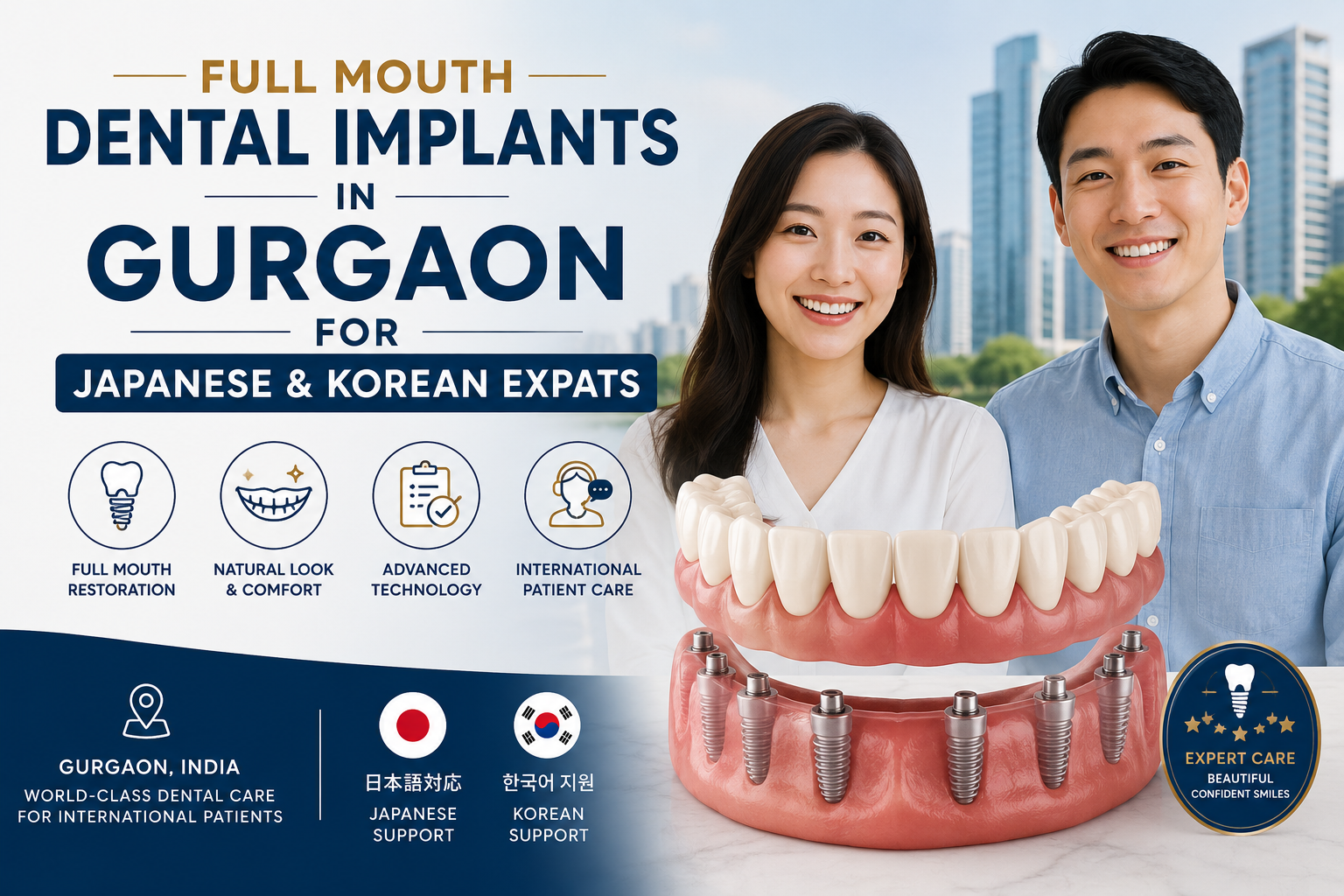
Imagine arriving in Gurgaon for a two-year corporate assignment and realising, somewhere between the third board meeting and the first weekend trip, that your teeth simply can’t wait until you fly home. Maybe you’ve been managing a crumbling bridge or missing molars for longer than you’d like to admit. Maybe you researched dental costs back in Tokyo or Seoul and quietly closed the browser tab. Whatever brought you here, the question is the same: where do you find a dental clinic in India that understands exactly what you expect — technically, aesthetically, and culturally?
Full mouth dental implants in Gurgaon have become a realistic, high-quality option for Japanese and Korean professionals living and working in the Delhi NCR region. The city has a growing cluster of internationally oriented clinics equipped with digital dentistry technology, trained implantologists, and — increasingly — multilingual support for non-English-speaking patients. This article walks through everything you need to know: what the treatment involves, what it costs compared to home, what to watch for when choosing a provider, and what questions are reasonable to ask before you commit.
Quick Answer: Is Gurgaon a Good Option for Full Mouth Implants?
Yes — for most expat patients, Gurgaon represents a compelling combination of clinical quality and cost savings. Full mouth dental implants, including All-on-4 and All-on-6 systems, are available at internationally accredited clinics in the city at roughly 40–60% less than equivalent treatment in Japan or South Korea. The best clinics use the same implant systems — Straumann, Nobel Biocare, MIS — available in Tokyo or Seoul, with digital planning, CBCT scanning, and zirconia crown options. Waiting times are shorter, and experienced implantologists who’ve trained internationally are not uncommon.
Treatment quality varies significantly between providers, so choosing carefully matters far more than the city itself.
Why Japanese and Korean Patients Consider Dental Treatment Abroad
Cost is the obvious starting point, but it’s rarely the only driver. Japanese professionals working overseas often postpone dental treatment until discomfort becomes severe — busy schedules, unfamiliarity with local systems, and a lingering assumption that treatment should wait until the next trip home all play a role. By the time they do seek care, the clinical picture has often progressed from a manageable issue to something requiring full arch restoration.
Korean patients tend to arrive with more proactive research already done. Cosmetic outcomes matter a great deal — natural aesthetics, tooth colour, and smile symmetry are frequently cited concerns. Many have already looked at providers in Thailand or Vietnam before considering India, and some are pleasantly surprised by what Gurgaon offers at this price point.
There are practical factors too. A two-year posting offers enough time to complete a multi-stage implant treatment without disrupting the process. Weekend appointment availability, proximity to DLF Cyber City and Udyog Vihar (where many Japanese and Korean firms are based), and the growing number of clinics offering English-language care all reduce the friction of seeking treatment locally.
Most Popular Dental Treatments Among Japanese and Korean Expats
Dental Implants
Single tooth implants, implant-supported bridges, and full arch implant rehabilitation are the most requested treatments. Many patients who arrive for a consultation about one failing tooth discover that a full mouth assessment reveals broader issues — bone loss, multiple failing restorations, or severe gum disease — that make full mouth rehabilitation the more appropriate long-term solution. Bone grafting for dental implants, where needed, is routinely performed at the better-equipped Gurgaon clinics.
Smile Makeovers
A smile makeover in India can combine teeth whitening, veneers, and implants into a coordinated aesthetic plan. Korean patients in particular often request precise colour matching and smile design previews before agreeing to proceed — a reasonable expectation that clinics using digital smile design software can meet.
Invisalign
Invisalign treatment is widely available in Gurgaon and is particularly popular among expats who want to address alignment issues during their posting. Costs run substantially lower than in Japan or South Korea, and the global nature of the Invisalign system means treatment can be continued by a provider back home if needed.
Veneers
Porcelain and composite veneers are frequently requested by patients who want a complete aesthetic transformation without the complexity of implant surgery. Zirconia dental crowns — renowned for their durability and lifelike translucency — are often recommended alongside veneers for patients with existing crown work requiring replacement.
Full Mouth Rehabilitation
Full mouth rehabilitation is a comprehensive treatment approach that addresses both function and aesthetics simultaneously — typically combining implants, crowns, veneers, and gum treatment into a single coordinated plan. For patients who’ve been managing multiple failing teeth for years, this approach restores confidence and oral health together. It requires a skilled prosthodontist or implantologist with solid experience in sequencing complex cases.
Why India Has Become a Preferred Destination for Dental Tourism
India’s dental tourism credentials have strengthened considerably over the past decade. Several factors make it particularly relevant for patients from East Asian countries:
- Internationally trained specialists — many implantologists practising in Delhi NCR have completed fellowships or training programmes in the US, Europe, or Australia.
- Advanced implant technology — digital implant dentistry using guided surgery, CBCT cone beam imaging, and CAD/CAM same-day crown fabrication is now standard at leading clinics.
- Shorter waiting times compared to most public dental systems in Japan or the NHS-equivalent systems patients encounter abroad.
- English-language proficiency among clinical staff, reducing communication risk during complex treatment planning.
- JCI-accredited hospital dental departments and internationally benchmarked private clinics available within the Delhi NCR region.
Gurgaon specifically benefits from its corporate expat community, which creates commercial pressure on clinics to maintain international standards — a dynamic that doesn’t apply to the same degree in smaller Indian cities.
Treatment Cost Comparison: Gurgaon vs Japan vs South Korea
The figures below represent approximate mid-range market costs in each country as of 2024-25. Costs vary based on implant brand, clinic tier, number of implants, and individual treatment complexity. Always request an itemised treatment plan before comparing quotes.
| Treatment | Japan (JPY / INR equiv.) | South Korea (KRW / INR equiv.) | Gurgaon, India (INR) |
| Single Tooth Implant | ¥300,000–500,000 (~₹1.7L–2.8L) | ₩1.5M–3.5M (~₹85K–2L) | ₹35,000–75,000 |
| All-on-4 (per arch) | ¥1.5M–2.5M (~₹8.5L–14L) | ₩12M–20M (~₹6.8L–11.4L) | ₹2,50,000–4,50,000 |
| All-on-6 (per arch) | ¥2M–3.5M (~₹11.3L–20L) | ₩15M–25M (~₹8.5L–14L) | ₹3,50,000–6,00,000 |
| Full Mouth Rehabilitation | ¥3M–6M (~₹17L–34L) | ₩20M–40M (~₹11.4L–22.8L) | ₹5,00,000–12,00,000 |
| Porcelain Veneer (per tooth) | ¥80,000–150,000 (~₹45K–85K) | ₩400,000–800,000 (~₹22K–45K) | ₹8,000–18,000 |
| Zirconia Crown (per tooth) | ¥60,000–120,000 (~₹34K–68K) | ₩350,000–700,000 (~₹20K–40K) | ₹7,000–16,000 |
Note: INR equivalent figures are indicative. Exchange rates fluctuate — confirm current rates before treatment planning.
Quality Standards and Technology: What to Expect
The gap between a well-equipped Gurgaon implant clinic and a comparable facility in Seoul or Tokyo has narrowed markedly. Here’s what the best clinics now offer:
Technology Checklist — What a High-Quality Implant Clinic Should Have• CBCT (Cone Beam CT) scanner for 3D bone assessment before implant planning • Digital smile design software for aesthetic previews • CAD/CAM in-house milling for same-day or next-day crown fabrication • Nobel Biocare, Straumann, or other internationally validated implant systems • Guided implant surgery using surgical stents (reduces error margin significantly) • Intraoral scanners (eliminates messy impressions in most cases) • Sterile surgical suites with international infection control protocols |
Bone grafting for dental implants — using synthetic graft materials or processed bone substitutes — is performed at reputable Gurgaon clinics where bone volume is insufficient for direct implant placement. This is a routine part of full arch rehabilitation for many patients.
Cultural Expectations of Japanese and Korean Patients
Experienced clinicians who regularly treat international patients learn quickly that cultural background shapes the clinical relationship as much as the clinical need.
Observations from Clinical PracticeJapanese patients generally prefer thorough explanations before consenting to treatment — diagrams, X-rays, and written summaries carry more weight than verbal assurances. Punctuality and unhurried appointments are valued highly. Korean patients frequently research cosmetic outcomes extensively before booking a consultation. Requests to see case photographs, 3D smile simulations, or digital previews are common and entirely reasonable. Both groups typically expect a high level of procedural cleanliness and sterility — this isn’t a superficial preference but a reasonable clinical expectation that any accredited clinic should meet without prompting. Language support matters. Even when a patient’s English is functional, treatment consent and post-operative instruction are areas where patients appreciate written materials in their native language. |
Clinics that have invested in Korean- or Japanese-speaking coordinators, translated patient forms, or partnerships with expat community networks have a meaningful advantage in this patient segment.
How to Choose the Right Dental Clinic in Gurgaon
Not all clinics that advertise implants are equally equipped to handle full arch restoration or complex cases. Here’s a practical filtering process:
Step-by-Step Clinic Selection Checklist1. Verify the implantologist’s qualifications — look for MDS (Prosthodontics or Oral Surgery), international fellowship training, or published case experience. 2. Ask specifically what implant brand they use — and whether it’s the same brand they’ve consistently trained with. 3. Confirm they have in-house CBCT imaging. Any clinic asking you to get a scan done elsewhere before your first consultation may lack essential planning infrastructure. 4. Request before-and-after case photographs for cases similar to yours — not stock images. 5. Ask about the treatment timeline upfront — All-on-4 or All-on-6 implant treatment typically spans 3–6 months for osseointegration. Same-day teeth are possible but carry caveats. 6. Clarify what’s included in quoted costs — bone grafting, temporary prosthetics, final crowns, and follow-up visits should all be itemised. 7. Check for a treatment guarantee or warranty on the prosthetic component — reputable clinics offer at least a 1-year coverage period on crown work. |
Pros and Cons of Getting Full Mouth Implants in Gurgaon as an Expat
| Factor | Pros | Cons |
| Cost | 40–60% lower than Japan / Korea | Still a significant upfront investment |
| Technology | Top clinics match Seoul/Tokyo standards | Varies widely — research essential |
| Timeline | Shorter wait; fits a 2-year posting | Multi-stage treatment requires commitment |
| Language | English widely available | Japanese/Korean support limited to select clinics |
| Follow-up | Continuity of care during posting | Returning home mid-treatment needs planning |
| Implant systems | Same global brands available | Verify brand — don’t assume |
Common Questions Patients Ask Before Travelling for Treatment
These are questions frequently raised during initial consultations — addressed here so patients arrive prepared.
Can I start treatment in Gurgaon and continue it back home?
Yes, in many cases. Single implants and straightforward All-on-4 cases can often be planned so the osseointegration phase occurs between visits, with the final restoration placed later — either in Gurgaon or by a compatible provider at home. Discuss this scenario explicitly at the planning stage; not all clinics will manage the handover documentation well without prompting.
How long will I need to take off work for each appointment?
The surgical placement appointment for full arch implants typically requires the day itself and one or two recovery days — though individual responses vary. Post-operative appointments for suture removal and healing checks are usually brief. Most working professionals structure treatment around weekends and public holidays with minimal disruption to working schedules.
Will the aesthetic result match what I’d get in Seoul or Tokyo?
At the right clinic, yes. Zirconia crowns and high-grade ceramic prosthetics used by leading Gurgaon implantologists are sourced from the same international dental laboratory suppliers used globally. The limiting factor is the skill and aesthetic eye of the prosthodontist, not the materials — which is why verifying credentials and reviewing case photographs genuinely matters.
Expert Tips Before Starting Treatment
Expert InsightsGet a CBCT scan done early. Even if you’re undecided about treatment, understanding your current bone volume shapes every subsequent decision — whether it’s a single implant or a full arch. Don’t optimise purely for cost. A ₹30,000 difference between two clinics matters far less than the difference between a well-experienced implantologist and an inexperienced one. Full arch rehabilitation is irreversible. Ask about the temporary prosthetic. During the osseointegration period, you’ll be wearing a temporary restoration. Understand its limitations — what you can and can’t eat — before you agree to proceed. Request records in English and your native language. Treatment summaries, X-rays, and implant brand/model information in a format you can share with a dentist back home is worth asking for at the outset. Factor in post-operative care. Full arch implants require diligent hygiene maintenance. Your clinic should provide a structured cleaning protocol and at least one hygiene review before your case is considered complete. |
Key Takeaways• Full mouth dental implants in Gurgaon cost 40–60% less than comparable treatment in Japan or South Korea. • Leading Gurgaon clinics use the same internationally validated implant systems — Straumann, Nobel Biocare — as clinics in Tokyo or Seoul. • All-on-4 and All-on-6 dental implants are routinely available, including bone grafting where needed. • Japanese and Korean patients benefit from choosing clinics with documented international patient experience and, where possible, native-language coordination support. • A CBCT scan, itemised cost plan, and verified implantologist credentials are non-negotiable starting points. • Gurgaon’s proximity to major corporate hubs in the Delhi NCR makes it practical for expats to complete multi-stage treatment during a standard posting. |
Frequently Asked Questions
Q: What is the difference between All-on-4 and All-on-6 dental implants?
All-on-4 uses four implants per arch to support a full set of prosthetic teeth, while All-on-6 uses six. The additional implants in All-on-6 provide greater load distribution — which can be advantageous for patients with higher bite forces or where bone density allows for more anchor points. Your implantologist will recommend the appropriate approach based on your CBCT bone assessment and clinical presentation.
Q: Is bone grafting always required before full mouth implants?
Not always. Bone grafting is needed when the jaw bone has insufficient volume or density to support implants reliably — this is common in patients who’ve had missing teeth for several years. All-on-4 systems are specifically designed to use angled posterior implants to avoid the areas of the jaw most prone to bone loss, which can sometimes reduce or eliminate the need for grafting. A CBCT scan determines this definitively.
Q: How long does full mouth implant treatment take from start to finish?
Realistically, 4–6 months for straightforward cases. The implant placement surgery happens at one appointment; then the implants are left to integrate with the bone over 3–4 months while temporary teeth are worn. Final zirconia prosthetics are fitted after confirmed osseointegration. Complex cases involving bone grafting or phased extraction may extend the timeline.
Q: Can the Dental Villa provide treatment records in Japanese or Korean?
Patients should ask about language support at their initial consultation. Clinical records, implant specifications, and discharge instructions can often be provided in English, and some clinics work with translation services for Japanese and Korean patients. Confirm this at the time of booking rather than assuming — it’s a reasonable expectation to raise upfront.
Q: What happens if I return to Japan or South Korea before treatment is fully complete?
This is manageable with planning. If the osseointegration period falls within a travel gap, the final restoration can sometimes be placed by a compatible provider at home — provided they use the same implant system. Discuss this scenario at the planning stage. Your clinic should provide a full implant passport including brand, model, and dimensions in a format accepted by international dental providers.
Q: Is dental tourism to India for implants safe?
Safety depends on the clinic, not the country. At an accredited clinic with a qualified implantologist, proper sterilisation protocols, and appropriate surgical infrastructure, the clinical risk profile of dental implant surgery in Gurgaon is comparable to equivalent treatment in Japan or South Korea. Verify credentials independently, ask about infection control protocols, and don’t choose a provider purely on price.
Making the Right Choice for Your Dental Health
Full mouth dental implants in Gurgaon have moved well beyond ‘good enough for the price.’ For Japanese and Korean expats based in Delhi NCR, the combination of qualified specialists, advanced digital implant technology, and meaningful cost savings makes local treatment a genuinely sensible option — not a compromise.
What separates a successful experience from a difficult one isn’t the city or even the cost. It’s choosing a clinic where the implantologist’s experience matches the complexity of your case, where the technology genuinely supports the treatment plan, and where your cultural expectations around communication and aesthetics are understood from the first appointment.
The Dental Villa in Gurgaon welcomes international patients and understands the particular concerns of Japanese and Korean professionals seeking full mouth restoration locally. A thorough consultation — beginning with a CBCT assessment and a treatment plan presented in plain language — is always the right starting point.
Visit thedentalvilla.com to book your initial consultation.